




Behavior Tree System - Modular Entity AI & Mob Controller
Kiss.My.Assets
$5.49
(no ratings)
Jump AssetStore
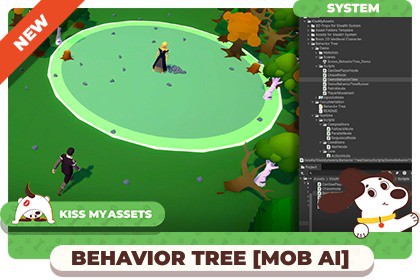
Behavior Tree System: Advanced Entity AI Framework for Unity. Features a node-based editor & visual debugging to create complex RPG & Action mechanics. Scalable, PC & Mobile ready.Behavior Tree System is a complete Entity AI & Mob Controller tool for Unity designed to help you build complex modular entity behaviors with ease. It delivers a professional, game-ready workflow including live visual debugging and ScriptableObject-driven configurations. Perfect for teams that need powerful system logic without the friction of overcomplicated setups.HELPFUL LINKS:| 🌐 WEBSITE | 💬 DISCORD |💬 BEHAVIOR TREE SYSTEM - CORE CAPABILITIES🚀 VISUAL NODE EDITOR Build and maintain complex AI logic flows using a clear, intuitive node-based editor window. ✅ Streamlined Flow: Composite, Decorator, and Action nodes are easy to connect and manage.🔀 MODULAR ENTITY LOGIC Handle dynamic state switching and player detection variables that impact how mobs react. ✅ Smart Reusability: Share behavior configs across different entities and tweak stats instantly.💾 LIVE VISUAL DEBUGGING Integrated runtime execution tracking to inspect signals running through nodes in real time. ✅ Instant Diagnostics: Debug broken conditions and transition delays directly inside the graph view.🧪 PRODUCTION READY Includes a complete demo scene showcasing core mechanics, optimized for both high-end and mobile performance.⭐ WHY CHOOSE BEHAVIOR TREE SYSTEM?Scalable Logic: Handles everything from simple patrol loops to massive boss fight AI structures.Fast Integration: Ready-to-use components and demo scenes for instant results.Pro Workflow: Less boilerplate code, more focus on your game’s unique features. Less system overhead — more time for the product.🎮 BEST FIT GENRES BEHAVIOR TREE SYSTEM shines in games where tactical AI and reactive mob behaviors matter:✅ RPG / Action RPG — complex boss patterns and elite enemy behaviors; ✅ Stealth / Adventure — line-of-sight cones, hearing sensors, and guard patrols; ✅ Strategy / Management — autonomous unit decision-making and logic modules.PACKAGE CONTENTS15+ Core System Scripts & Logic Modules1 Custom Node-Based Editor Window3 AI Agent Prefabs & ScriptableObject Presets2 Example Scenes & Implementation Templates🔗 POSSIBLE INTEGRATIONSFMOD for UnityPlayMakerDialogue System for UnityBehavior DesignerWeather MakerEnviro – Sky and WeatherQuest MachineJU TPS 3 - Third Person Shooter GameKit + Vehicle PhysicsDOTS Traffic City3D Roguelike RPG Complete Kit for Mobile and PC: TPS, Enemy AI, Puzzle and PropsMedieval & Fantasy Giga BundleTons of Effects - VFX Bundle URPOdin Inspector & SerializerPlaymaker / Bolt / NodeCanvasStarter Assets - ThirdPerson | URPUniversal Sound FXThe Complete UI Sound Effects LibraryHorror Bundle - Sound EffectsCasual & Mobile Music and Sounds PackModern Weapons ALL-IN-ONE Sound SystemUniversal Audio BundlePro Sound CollectionUltimate Game Music CollectionTotal Music CollectionMedieval Fantasy 2 Audio BundleCute UI & Interact Sound Effects PackColossal Game Music CollectionMedieval Fantasy Audio Bundle (Music + Ambience + Effects)Game Character Voice BundleHero Characters BundleStarter Assets - FirstPerson | URPSurvival Template PROSurvival Engine - Crafting, Building, FarmingAdvanced Multiplayer Game TemplateClean Multiplayer ProBeat 'Em Up - Game Template 3DLarge Scale Combat System - RTS SiegesTopDown Engine2D RPG KitColony SimulatorEmerald AI 2025Mobile Pedestrian SystemDialogue System for Unity3D Stealth Game: Haunted HouseEasy Save 3GUI Pro - Minimal Game Light / DarkHeat - Complete Modern UIUltimate Clean GUI PackPixel Art Full GUI / UI KitDamage Numbers ProI2 LocalizationCard Game CoreOdin Inspector & SerializerNaughtyAttributesMore Mountains – FeelUltimate Character ControllerFootsteps – EssentialsRewiredFeel by More MountainsCorgi EngineTopDown EngineAsset Specifications:Logic Type: Node-based graph editor / ScriptableObject-driven architecture.Code Quality: Fully documented C#, Namespaced, ASMDEF included.Optimization: Designed for minimal GC impact and high-performance processing (Zero allocation on node evaluation loops).Dependencies: None (Self-contained, works out of the box).Compatibility & Requirements:Unity Version: 2021.3 LTS or higher.Render Pipelines: Compatible with Built-in, URP, and HDRP (Independent of rendering systems).Platforms: Designed for PC, Mobile, WebGL, and Consoles.Included Files:Core Engine: All source code and modular AI system libraries.Editor Tools: Custom graph editor, real-time node debugging view, and enhanced inspectors.Demo Scene: 1 Technical showcase featuring patrol, search, and chase AI mechanics with fully configured examples.