





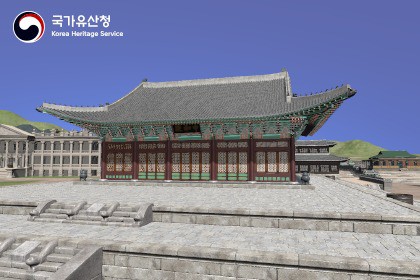
These 3D assets were produced by Korea Heritage Service as a project to build raw resources for the production and supply of Korean heritage digital contents in 2025.For commercial use, you can mark the 'Korea Heritage Service' as the source.KOREA HERITAGE SERVICE [KHS]The Korea Heritage Digital Service is a service that releases various national heritage data, so that companies, regions, and the public can easily find high-quality national heritage data. It is expected to be of great help to the public as well as companies, local governments, universities and research institutes by releasing national heritage data such as 3D data, drawings, photos, reports and videos that are difficult for the public to access.You can easily access the data by using conditional search functions such as designated items, regions, eras and production years, and also can easily check information such as 3D scanned videos and web VR contents provided by Korea Heritage Service through services such as '3D Asset' and 'Theme Contents'.Built in the Joseon Dynasty, Deoksugung Palace was once called Gyeongungung Palace. Its name Deoksugung originated with praying for the long life of Emperor Gojong when he stayed here after he handed the throne over to his son, Emperor Sunjong, in 1907. In this site, there used to be a house for Prince Wolsan, brother of King Seongjong (1457-1494). After the Japanese Invasion of Korea in 1592, King Seonjo came back to Hanyang and made the house a temporary residence since all palaces were burnt down. It had served as a palace since the 26th year of the reign of King Seonjo (1593). The houses of Prince Gyerim and Sim Ui-gyeom in the vicinity were also included in this palace. Succeeding his father, King Gwanghaegun named it Gyeongungung in the 3rd year of his reign (1611), using it as the palace until moving into Changgyeonggung in 1615. Later, Queen Inmok, wife of King Seonjo, was expelled and detained here, and King Gwanghaegun renamed it Seogung. After the enthronement in 1623, King Injo gave the buildings in Deoksugung Palace back to the original owners except Jeukjodang and Seogeodang halls. Since Emperor Gojong moved in here after hiding at the Russian Legation, it was reused as a palace. The western-style building was built after it was burnt down in 1904. In particular, it lost the harmony with the original palace buildings since huge stone buildings were built. What changed the most was the location of the main gate. It was Inhwamun Gate on the South but changed into Daehanmun Gate, originally Daeanmun, on the east. Although it served as the palace in the late Joseon Dynasty, Deoksugung Palace was considered a unique palace of the Joseon Dynasty, with its historical presence at the end of the Joseon Dynasty; it preserved both traditional stone-made architectures and western-style ones.Number of Unique Meshes : 573Number of Textures : 875LODs: NoNumber of Materials : 230Texture Resolutions: 4 - 2048Texture Dimensions : 4 - 2048Vertex Count: 24 - 538,251Types of materials and texture maps : PBR