



Elemental Surfaces - Interactive Environment Effects System - URP/HDRP
Camisado Studios
$50.62
$79.99
37%OFF
Jump AssetStore
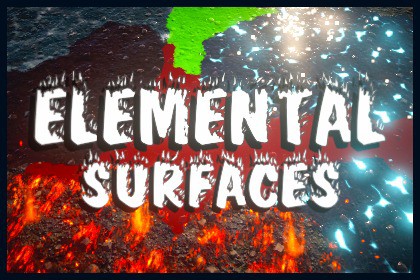
Elemental Surfaces is a powerful gameplay system for creating dynamic, reactive ground effects and mechanics — fire, water, ice, oil, electrified water, ash, and anything else you can imagine.✨ OverviewGenerates a 3D cell volume directly from your scene colliders, and simulates interactive surface effects and mechanics like fire, water, ice, oil and more. Powering visuals, transforming your environments and filling them with emergent gameplay.Decal-based rendering means zero dependency on custom shaders — use your current materials and integrate into existing projects effortlessly.Powered by Unity’s Job System and Burst for high-performance, multithreaded execution.📕 - DOCUMENTATION🎮 - WEBGL DEMO🧱 Included Surface Types🔥 Fire – spreads through oil and eventually burns into ash.❄️ Ice – freezes nearby water and melts over time.🌊 Water – reflective surface that can be frozen.🛢️ Oil – flammable surface that ignites when exposed to fire.⚫ Ash – the remnants left after fire burns out.⚡ Electrified Water - spreads into water, will discharge over time, and can also be frozen.There are plans to add more starter surfaces as development continues, but adding your own is quick, easy and turns the system into something very unique for your project.🧠 BehaviorSurfacePropagation – Spread surfaces naturally (e.g., ice freezing water, fire igniting oil).SurfaceRegionDecay – Advanced region-based transformations over time (e.g., ice melting to water, fire turning to ash).Custom Reactive Behaviors – Easily create your own dynamic, emergent surface interactions using the ISurfaceZoneListener interface. Read from the cell volume to implement your own custom mechanics, for example:Characters taking damage when standing on fire.Sliding when on ice.Footstep SFX/FX depending on surface type.Magic spells that create, destroy or change surfaces from one type to another.✏️ Unlimited Surface PossibilitiesDefine new surface types and behaviors in minutes.Integrate seamlessly with your existing materials and shaders.Instantly populate surfaces with props, VFX, and interactive elements.Achieve realistic PBR decals or fully stylized custom visuals — your choice.🚀 Unlimited Gameplay MechanicsBake the cell volume fast, in the Editor or at runtime (ideal for procedural generation), then modify surfaces dynamically to power:Evolving environmental hazards.Creative puzzle systems.Explosive elemental combinations.Emergent strategy and simulation mechanics.📺 RenderingSurfaceDecal – Uses DecalProjectors and a specialized decal shader to render surfaces with height-based fading, organic noise displacement, blending, and full PBR support.SurfacePrefabSpawner – Randomized, weighted prefab spawner for dynamic surface decorations and interactive elements.Fully modular — data and rendering are separate, letting you implement your own stylized visuals with zero restrictions.📊 DataSurfaceZone – Define 3D volumes with customizable cell density. Query at runtime to get/set surface types. Data is baked into asset files (SurfaceZoneData) for easy version control. Surface types are stored as reusable assets (SurfaceData) and organized in libraries (SurfaceLibrary) for modular efficient usage.ISurfaceZoneListener – Interface for rendering and behavior systems to read and react to data changes in real time.Clean separation of data and rendering — fully customizable visuals without touching core logic.3D cell volumes generated via collider-based raycasting.Local-space baking enables seamless support for moving platforms (SurfaceZone as a child of the platform).Supports up to 1,000,000 cells per SurfaceZone (add more zones for unlimited scale).Powered by Unity’s Job System and Burst for high-performance, multithreaded execution.Supports URP & HDRP.All source code is included.📕 - DOCUMENTATION🎮 - WEBGL DEMO